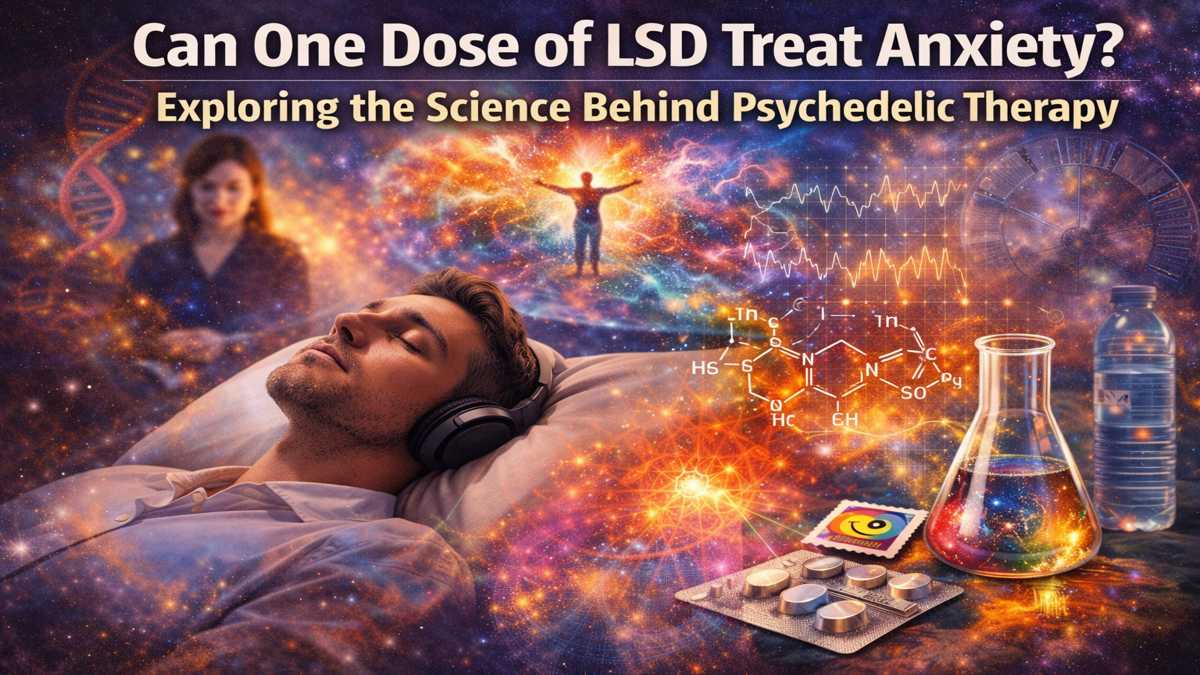
Exploring the Science Behind Psychedelic Therapy
In recent years, the world of mental health research has been witnessing a surprising shift. Substances once associated primarily with counterculture movements are now being studied in top medical institutions. One of the most intriguing questions emerging from modern psychiatric research is: Can a single dose of LSD treat anxiety?
While it may sound controversial, a growing body of clinical trials, neuroscience research, and psychedelic therapy studies suggests that LSD—when used in carefully controlled medical settings—may provide rapid and long-lasting relief for certain anxiety disorders.
This article explores the science, clinical evidence, mechanisms, and risks behind LSD-assisted therapy for anxiety, and whether a single psychedelic experience could reshape the future of mental health treatment.
Understanding Anxiety Disorders
Before examining the potential of LSD therapy, it is important to understand the scale of the problem.
Anxiety disorders are among the most common mental health conditions worldwide, affecting hundreds of millions of people. These disorders include:
-
Generalized Anxiety Disorder (GAD)
-
Panic Disorder
-
Social Anxiety Disorder
-
Health-related anxiety
Traditional treatments typically involve cognitive behavioral therapy (CBT) and medications such as:
-
SSRIs (Selective Serotonin Reuptake Inhibitors)
-
benzodiazepines
-
antidepressants
However, these treatments often take weeks or months to produce noticeable effects, and many patients experience limited relief or unwanted side effects.
This challenge has prompted scientists to explore alternative psychiatric treatments, including psychedelic-assisted therapy.
The New Research on LSD and Anxiety
Recent clinical studies have produced remarkable findings about LSD’s therapeutic potential.
A large randomized clinical trial investigating MM120, a pharmaceutical form of LSD, examined nearly 200 adults with moderate to severe generalized anxiety disorder. Researchers compared several LSD doses with a placebo treatment.
The results were striking:
-
65% of participants receiving a 100-microgram dose showed significant improvement in anxiety symptoms after 12 weeks.
-
Nearly half of those patients reached clinical remission.
-
Lower doses (25–50 micrograms) did not produce meaningful improvements.
This research suggests that a single carefully administered dose of LSD could reduce anxiety symptoms for several months.
These findings have fueled renewed interest in psychedelic medicine and anxiety treatment innovation.
Why One Psychedelic Dose Might Have Lasting Effects
Unlike most psychiatric medications, which must be taken daily, psychedelics appear to work through fundamentally different mechanisms.
1. Brain Network Reset
LSD strongly interacts with the serotonin 5-HT2A receptor, which plays a key role in mood, perception, and emotional processing.
When this receptor is activated, brain imaging studies show that LSD can temporarily reorganize communication between different brain networks.
This effect may disrupt rigid thought patterns often associated with chronic anxiety and rumination.
2. Increased Neuroplasticity
Another important mechanism involves neuroplasticity, the brain’s ability to form new neural connections.
Research suggests that psychedelics can enhance the brain’s capacity to reorganize neural pathways, potentially allowing patients to break free from entrenched emotional patterns.
This increased plasticity may explain why therapeutic changes can persist long after the drug has left the body.
3. Profound Psychological Experiences
Many participants in psychedelic therapy studies report experiencing deep emotional insights, altered perspectives, or feelings of connectedness during LSD sessions.
Researchers believe these experiences can lead to:
-
emotional breakthroughs
-
reduced fear responses
-
improved emotional processing
When integrated with therapy, these experiences may produce long-term psychological benefits.
Evidence from Earlier Psychedelic Studies
The modern resurgence of psychedelic research actually builds on earlier work.
Between the 1950s and 1970s, LSD was widely studied in psychiatry and was used experimentally to treat:
-
anxiety disorders
-
depression
-
addiction
Although these early studies lacked modern clinical standards, they frequently reported significant psychological improvements among participants.
Today’s research uses rigorous clinical protocols, controlled dosing, and medical supervision, giving scientists far more reliable data.
The Role of Psychedelic-Assisted Therapy
It is important to note that LSD treatment in clinical settings is very different from recreational use.
In research environments, psychedelic therapy typically includes:
-
Psychological preparation sessions
-
A supervised dosing experience
-
Integration therapy afterward
During the LSD session, patients remain under the care of trained professionals who help guide the experience safely.
This therapeutic framework appears to maximize benefits while reducing psychological risks.
Potential Risks and Side Effects
Despite promising results, LSD therapy is not without risks.
Reported side effects in clinical trials include:
-
temporary hallucinations
-
nausea
-
headaches
-
emotional intensity
In some cases, patients may experience fear or anxiety during the psychedelic experience, which is why medical supervision is essential.
Researchers also emphasize that LSD is not appropriate for everyone, particularly individuals with certain psychiatric conditions.
The Future of LSD-Based Anxiety Treatments
The encouraging results from recent trials have led researchers to launch larger Phase 3 clinical trials, which are required before any new psychiatric treatment receives regulatory approval.
If future research confirms current findings, LSD-based treatments could represent one of the most significant innovations in mental health care in decades.
Potential advantages include:
-
rapid therapeutic effects
-
long-lasting benefits from a single treatment
-
reduced reliance on daily medication
However, scientists stress that more research is needed to determine long-term safety, optimal dosing, and patient selection.